
Is creating sewing patterns the future for indie designers?
A chat with Murphy Thiel, who after cutting her teeth in the fashion industry (from cowboy boots to it girl bags), decided to launch her own pattern company.

Chelsea Carson, who’s behind the beloved indie pattern company Daughter Judy (the Coe Trousers are particularly popular) recently started a Q&A series in her newsletter, Loose Leef, about how to become a pattern maker. Carson, whose impressive resume includes Ralph Lauren and Alice + Olivia, clearly lays out what’s needed in terms of education and resources to make this career move in what appears to be a flourishing market. For decades “the big four” pattern companies — Vogue, McCalls, Butterick and Simplicity — dictated the majority of designs available to American sewists. (I would include the German Burda in this list for European consumers).
McCall’s and Butterick began in the 19th century as widely read women’s magazines featured fashion news and patterns. (Eleanor Roosevelt even wrote a McCall's column entitled "If You Ask Me.") But as home sewing decreased in popularity in the second half of the 20th century, the big four consolidated under one company. While they do continue to innovate (Simplicity had the brilliant idea to collaborate with popular sewers to create designs in their style for its “Know Me” range), there is a lot of room for creativity in terms of pattern design.
This is where indie pattern companies come in. I’d say since around 2010 (and the slow but sure revival of textile arts), there has been an explosion of small-scale pattern designers. They fill a gap in the market, both in terms of a wider range of styles and more inclusivity in pattern sizing. My regularly updated database of pattern companies has over 120 entries, ranging from vintage-inspired garments to swimwear to takes on the latest fashion trends.
There’s now an online course, taught by Victoria Werner, that helps creators turn their designs into patterns. Werner told me over email that she was working as an organic farmer in Montana and living in a camper when she listened to a podcast about becoming an indie sewing pattern designer: “As a farmer who was literally schlepping crates of food from the field to the market to make my money, the idea of creating a digital pattern file once and selling it over and over again sounded like the holy grail.”
After studying pattern-making in Rome (a dream, right?), Werner set up her Confident Patternmaking and Grading (turning a sample up and down sizes) class, now taken by hundreds of students. As she explained to me, “Every new pattern makes the world a more beautiful place, but size-inclusive patterns in particular are on the frontline of a revolution. Fashion brands and traditional sewing pattern companies have been leaving people out of their size ranges for as long as they've existed. As indie pattern designers we have the opportunity to make fashion accessible for people in completely new ways, making it possible for people to dress their unique bodies and express their unique styles in a way the world has never seen before. And we're just getting started.”
I should make the caveat here that I’m against the pressure to turn every hobby into a side hustle. (Personally I can’t count the number of times I’ve been asked if I would ever sell my sewing projects, something I’ve largely resisted.) But that being said, I’m interested in how commercial pattern-making could be a way for fashion designers to build a sustainable career. I’ve heard countless tales of indie designers creating their own brands and then after putting in their blood, sweat and tears, realizing it’s difficult to make a livable income on well-constructed, ethical garments. That’s why I was so excited to chat with Murphy Thiel about her evolution from fashion designer to pattern maker. She recently launched her brand the Good Murph with the Bonnie Top, a high fashion-inspired pattern that is still accessible for a confident beginner sewer. But first, the news on a bunch of pattern releases.
Scrap pile
Talking indie pattern companies, Merchant & Mills collaborated with the Paynter Jacket Co (which releases highly coveted pieces in small batches just a few times a year) on a pattern for a classic outerwear garment.
Seamwork has two new patterns accessible with a membership: the cozy-looking Pepper Sweater and wide-leg Noah Trousers.
Tilly and the Buttons just put out Drew, a new similar pullover sweater pattern with creative sleeve details.
Chalk & Notch released Reya, a very comfy pants and shorts pattern with a classy front pin tuck detail.
Friday Pattern Co.’s Dew Top and Dress is the sort of simple knit pattern that can be whipped up quickly but in the right material can also be effortlessly chic.
Puff and Pencil has a new, practical bag pattern featuring a cute buckle.
And Itch to Stitch has created the perfect just chilly enough to wear a jacket pattern with its Teifi Cardigan, designed for structured knit fabrics.
The Guardian has me dreaming of a sewing retreat in the UK’s Lake District.
What a dream: “25-year-old spent $300 on a sewing machine in high school—now her seven-figure denim brand is worn by Taylor Swift.”
And some recent Sewtok favorites:
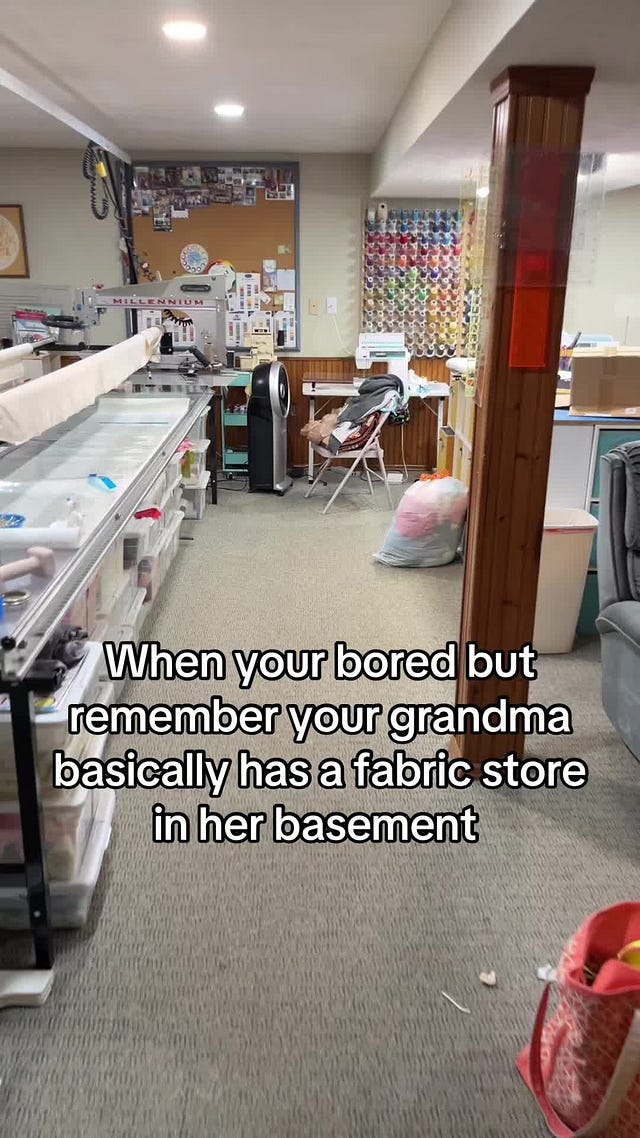
If I ever win the lottery, this is how you’ll know.
 Tiktok failed to load.
Enable 3rd party cookies or use another browser
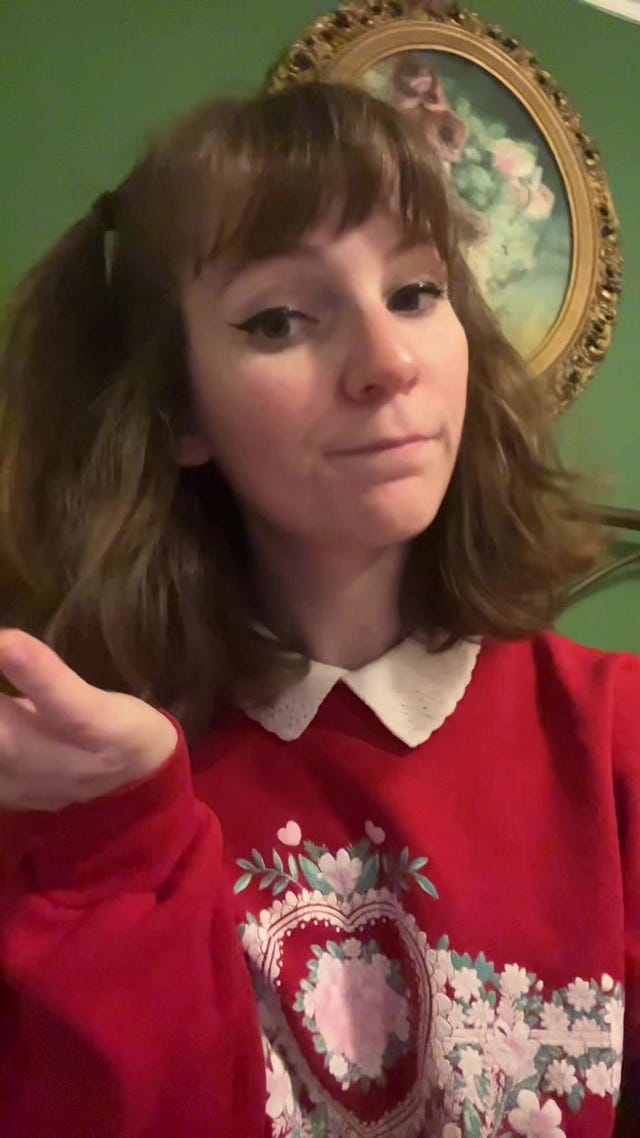
I love a festive homemade garment.
 Tiktok failed to load.
Enable 3rd party cookies or use another browser
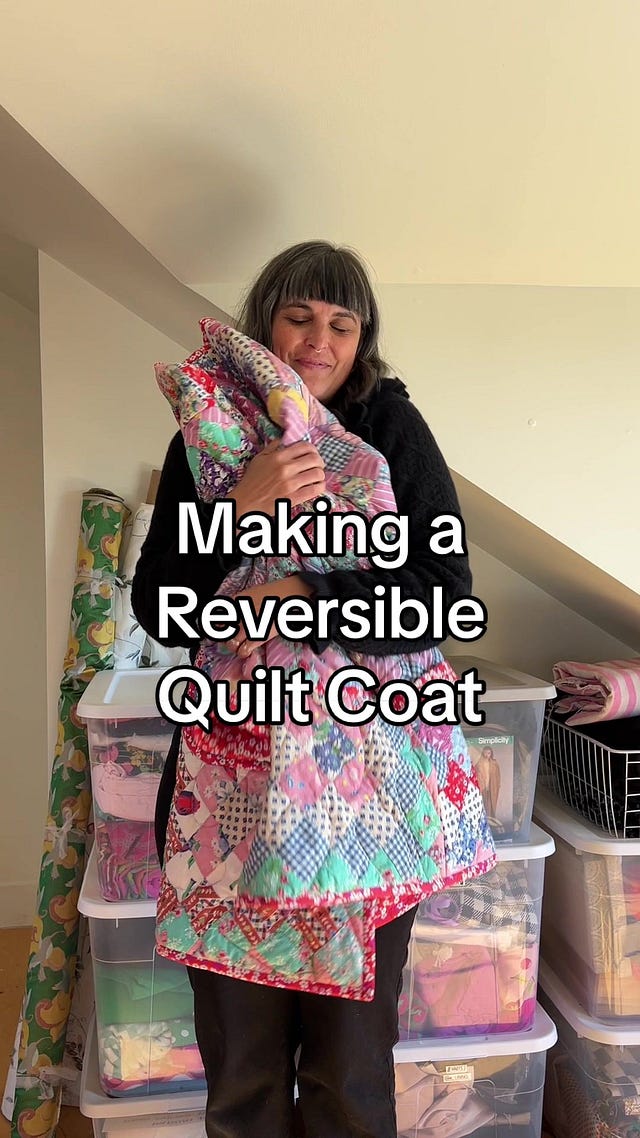
Martha Moore Porter is a long-time sewing favorite of mine, and I so want to make a quilted coat now.
 Tiktok failed to load.
Enable 3rd party cookies or use another browser
Threading the needle with Murphy Thiel
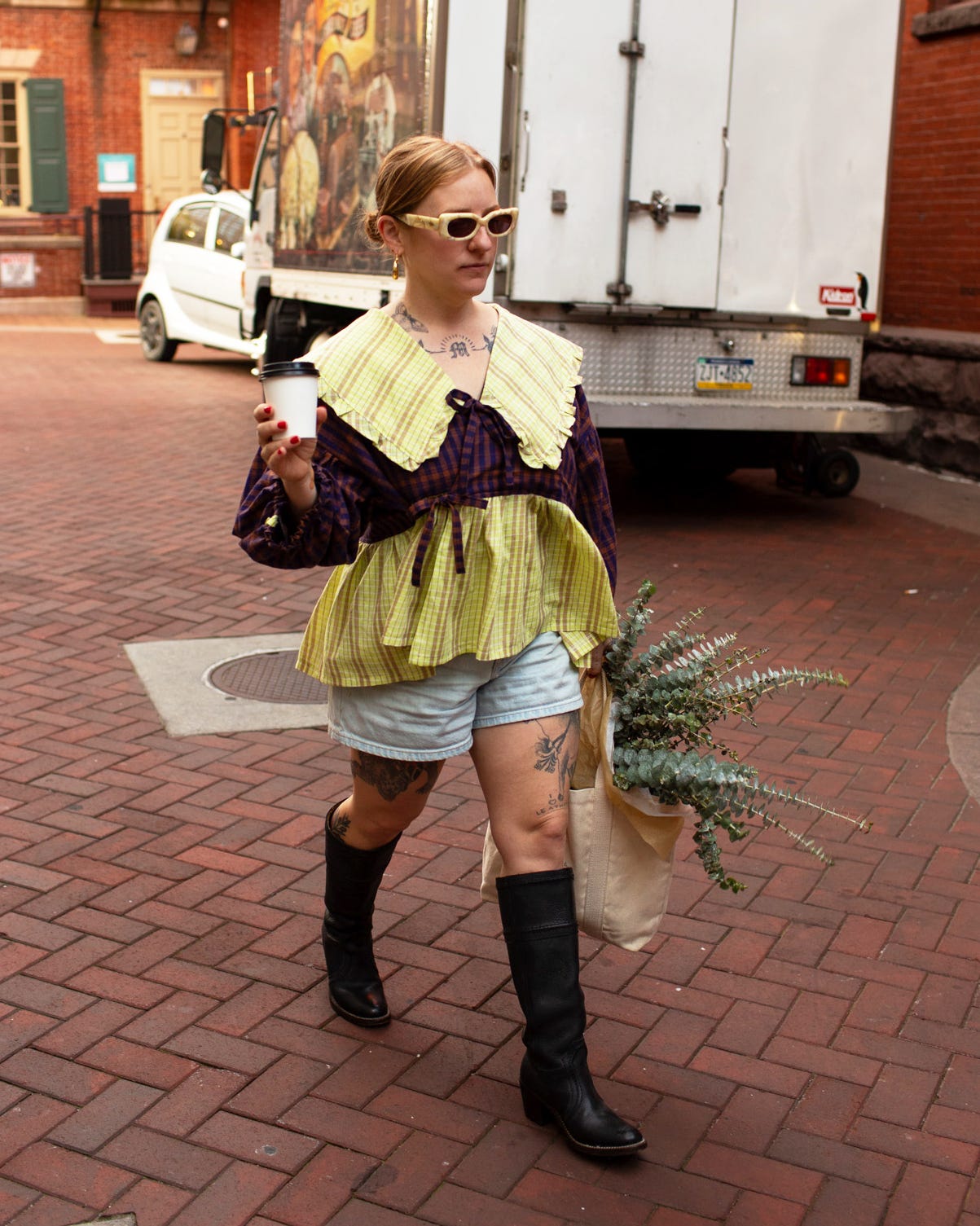
Every edition of Sew You Have a Question features a Threading the needle interview with someone in the textile arts world who’s brain I want to pick. This time, I was so happy to chat with Murphy Thiel, behind pattern company The Good Murph.
How did you start sewing?
I probably started sewing when I was seven, super duper young. I went to FIT, the Fashion Institute of Technology, for menswear design because I met this one person when I was applying for school, and she said if you want to go to school for fashion pick a specified field. Menswear was a small program, international and all different ages. My collection at the end focused all on leather. I got into leather because for menswear, it was so much tailoring: tailoring a blazer, tailoring pants, couture everything. It was so much hand sewing and fine couture details. I'm not like that at all. When I learned how to do leather work in a class at FIT, the woman said, "You need a knife, a hammer and glue to start." You can manipulate leather. It's a whole different ballgame.
After school, I worked for a motorcycle jacket company on the Lower East Side that did custom jackets and pants. We dressed celebrities. Then I decided to go back to school for accessory and footwear design because I had only done two years and was super pigeonholed into menswear. At the time, I was all in on leather. I had my own small company, making leather handbags under the name Run and Hide Leather. Then I started working for a luxury handbag company in New York called Wendy Nichol. They were for the cool Soho woman, all handmade, all stitched together. I was head of production. Later, I started my own clog company. I developed my own last shape; lasts are the mold you build shoes on. I invested all this money and literally made clogs out of my apartment. They were in shoe stores in Brooklyn, and it went well but was really difficult. I was proud of it, but it really wasn't making that much money.
Then I hit this point where I didn't want to be in New York City anymore. This is where my story goes haywire. I was like, “I want to make cowboy boots because I know how to make shoes and work with leather, but I want to take this to the absolute next level.” I found this woman in Albuquerque, New Mexico, where I didn’t know a single person. I work-traded with her. I thought that was going to be my path. I ended up meeting my husband there. We decided to move to Lancaster, Pennsylvania, which is where he’s from. I was still fully gung ho about I'm gonna be a bespoke cowboy bootmaker. But getting the equipment is hard: You need like $50,000 to invest in all these machines and you need to have a crazy workshop with ventilation because the glues you use are really toxic. I hit this point where I was like, “You know what? I think I'm just gonna not do that.”


In Lancaster, there's a really cool little downtown, but the surrounding area is farmland and Amish people. I fell back into sewing because I thought, I just want to sew clothes, normal clothes, no motorcycle jackets, no cowboy boots." I need this easy, mellow creative outlet again. I have always made a pretty good living sewing and doing my own stuff. That's what I've been doing for the past three years. It's been bringing me back to the original sewing fashion school journey.
How did the name Good Murph come about?
My old company, Run and Hide Leather, was in a different phase of my life. I just had this attitude. Then I entered this phase, basically in my early 30s, where I don't have to be this super hard person anymore. If I want to make really girly shit, I'm going to. I was this one narrow thing. I had this epiphany. I think it's this new, softer phase of I don't really have anything to prove to anybody and am just having fun and keeping it light. That's the inspiration behind the brand, very easygoing.
Can you talk about the process of releasing a pattern?
I took the Confident Pattern Making and Grading course. I have so much experience in pattern making over the years from so many different things. But I never digitized anything. It's so funny because I'm 34 and the stuff I learned in school is completely irrelevant. If I could have learned to pattern make on Adobe Illustrator, that would be amazing. I hope they are now teaching kids how to do that. The fashion industry, especially in the education world, is a really weird place because it moves so fast. The people who are teaching you don't know how to do that. Finding that course was a game changer. After grinding for so long producing my own collections, really hard sewing work, this has been so nice to just be like, “Oh, now I can just be in the sewing world but it's a little bit of a slower pace, which is really nice. “
It seems like not enough fashion designers are exploiting the home sewing market.
For sure. It's been interesting seeing the home sewing community explode. Sometimes I'm reluctant to say that because I wonder is it exploding or is it in my world I now see this crazy big thing? But I feel there's a really big need for people. Fast fashion is absolute garbage, as we all know. And there are so many brands that I absolutely love their stuff but it's just unattainable at the price point. You hit this point as a designer, and I definitely did, of just how can I ethically do this and make money? I think that's why you see a lot of indie clothing brands closing. I think, “God, this is so shitty.” But maybe the benefit is now people can start sewing their own clothes. I really believe in that, which is another reason I wanted to get into it. Because it's not as hard as people think. Let's say someone wants to make my Bonnie Top. I haven't done a YouTube video for it, but anybody could. I feel it's this little community I've started to get into. With home sewers, I love that everybody's like, "I modified this. And then I hacked it into this pattern." There's no reason to gatekeep any of this information. It's awesome and inspiring that people are jumping on this.
On that point, what was the inspiration behind the Bonnie Top?
I'm inspired by Scandinavian fashion and Copenhagen Fashion Week. The most stylish, influencer people that I love are always these Scandinavian fashion people because it's a little bit wacky and exaggerated. I definitely have two styles. I love bubbly, exaggerated and Scandinavian, with different proportions. I really like oversized stuff. I'm short, so when people are thinking about style, proportions are everything. And then I think there's also a little bit of living in Lancaster. It's farm country. Having a big exaggerated collar, it feels farmish to me.


Do you have any tips for people sewing the garment?
I think the fact that the Bonnie Top has tie closures makes it an easy intro sewing project. You're not dealing with buttons or zippers, which definitely you get into a harder skillset there.
One of the other things about the Bonnie Top I'm happy about is I made the construction to hide as many seams as possible. The top is lined. Probably the most difficult part to wrap your mind around is it's made in the burrito method, which is basically you're sewing everything inside out and then flipping it, so all the seams are hidden. The best advice I have is taking your time and double checking right sides and wrong sides.
That's something, too, that I wanted to focus on with this. I wanted to make a top with solid construction. I've made a ton of other patterns I've bought online. There is no fancy construction, and you just have raw seams, which is totally great. But for beginners and learning construction, I think having a super durable piece is important. This is a high-quality garment, and having that construction makes all the difference. You're not having any of the stringy seams out.
What are your future pattern ideas?
I have a couple of things in the works. I'm trying to figure out the next one I want to do. Because I worked in handbags and accessories, I feel making a handbag pattern would be a good intro for people. I think there's a need for that. If the Bonnie Top is like a six out of ten difficulty, I think having something that's a three or a two is great because then I can get more people in. It's like, okay, now you've done this. Now you can sew. You're not scared of x, y and z. I have a lot of tops and dresses I'm interested in doing. I have a keen eye on what other people are putting out. So if somebody else is putting out a jacket pattern, I'm like, "Oh, okay, I'm not gonna do a jacket pattern. I'm gonna wait on a couple of other things."
It's keeping your brand identity and vision super strong. There's more than enough to go around for everybody. The best thing about this is I just want to have a lot of fun. I want to inspire people to start making their own clothes, and inspire people to if you see something like Copenhagen Fashion Week, and you're like," Oh, my God, I really want this top that has a big collar and it has two tie closures." And then you see something that I just put out, it's like you could make that tomorrow. I love that about putting patterns out.
Very interesting and I wonder what impact the demise of Joann Fabrics will have on the market for sewing patterns